Saving Ukraine’s Cultural Heritage Amid War
Marta Bilas is the Donor Relations Manager at the Ukrainian NGO “Museum Open for Renovation” which the Ukrainian Museum has recently supported through its SAFE program. The funds were raised during special event in NYC organized in partnership with FROLOV, a Ukrainian couture-to-wear brand. Marta chats with us about the impact of their team’s coordinated efforts.
1. Marto, since the full scale invasion, your team led by historian Leonid Marushchak has saved hundreds of thousands of museum artifacts and works of art. Salvaging cultural objects on the frontline territories means working in a hurry, in anticipation of shelling, under drones, not always accompanied by police, and often retrieving objects from under smashed walls (like it happened with the surviving lion statue in Bakhmut). Have you had a chance to adjust these activities in recent months and years, compared to the work that was required at the early stages of full-scale invasion?
It is thanks to the fact that since 2015 we have been actively engaged in researching the territories of Ukraine, focusing on cooperation with regional museums, that we have managed to form a large specialised community with which we have been ‘keeping our finger on the pulse’. A few days before the full-scale invasion, we held a large-scale zoom conference with all the museums of Donetsk and Luhansk regions, with the participation of representatives of the Ministry of Culture and regional administrations. It was then, even before the full-scale invasion, that we had a real picture of the situation on the ground, and most importantly, an understanding of the list of materials and means that were needed to prepare for the evacuation of museum collections. Our research activities allowed us to have a clear understanding of the location and value of various kinds of collections (museum and private).
Perhaps it was intuitive, but from the first days of the full-scale invasion, when everything seemed all out, we focused on those regions and territories where there is now a localised war zone.
2. NGO “Museum Open for Renovation” grew out of the initiative “DE NE DE” that since 2015 engaged dozens of artists, scholars, museum workers and activists into creative activities and expeditions in the eastern Ukraine (Mariupol, Sloviansk, Sieverodonetsk etc). Your projects focused primarily on decommunization efforts within these regional communities. In 5 years, your NGO expanded this important work across nearly 200 different regional museums. How are you managing to preserve these networks of collaboration today when so many museum and art professionals are displaced and affected by war on various levels?
Our contact base and the network of participants in our project ‘Museum Open for Renovation’ has undergone dramatic changes. But it is worth remembering that it is the systematic work and sustainability of the work on the ground that makes it possible to have the results we can be proud of, and an understanding of how to act effectively and pragmatically in priority areas and not to be scattered.
The main marker for our response is devastation and depopulation. Shelling or communication problems have a significantly catastrophic impact and consequences in places where there is no civilian population. Spontaneous and uncontrolled processes, including evacuations, are even more catastrophic.
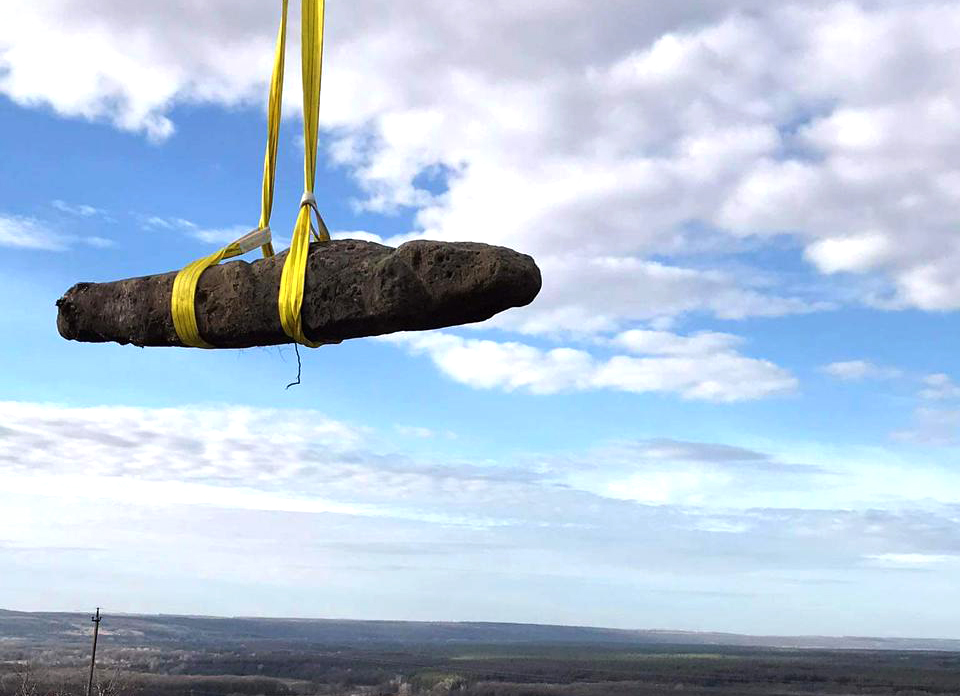
3. Leonid has seen crumbling Polovtsian stone women statues of the 9-13th century near Izium in 2023, evacuated Zhanna Kadyrova’s contemporary sculpture from Pokrovsk in summer 2024, just before Russian troops focused on seizing the city. What cultural heritage objects or sites are you most concerned about these days?
In our opinion, over the past three years, it is time to finally draw global conclusions at the highest national level. A clear algorithm of actions in specific circumstances should be finalised and approved, with those responsible identified.
Our concern is only intensified by the focus not only on museums in the areas of greatest risk, but also on collections of valuable artefacts stored in sacred buildings, which, unfortunately, are still managed by the Moscow Patriarchate. Similarly, our concern also relates to the poorly regulated issue of maintaining museum collections in educational institutions (schools, universities, etc.) that are subordinated to another ministry and subject to different regulations and procedures.
4. What are your priorities when it comes to collaborating with the governmental and local authorities in situations where the erasure of local cultural heritage is at stake?
As of now, we are making every effort to consolidate efforts between the various highest executive authorities in Ukraine. It is to ensure that not only our activities allow us to have rescued cultural heritage objects (such as museum collections, works of art from private collections, artefacts of modern history, etc.) for regions that may remain empty or a battlefield for a long time to come. We believe that in times of war, we cannot neglect the value of certain items or objects that may seem unimportant to some (compared to the main national museum collections or popular historical halos). Our position is clear: the museum room of a village school, a medical school in a district centre, a factory museum in a large city, or the ‘disputed’ property of a religious institution under enemy control should not be left alone to face the realities of war! All of the above are items and objects that are an invaluable source of information in the context of historical and cultural heritage, which are extremely important for shaping strategies for rebuilding, developing, and defending one’s own Ukrainian identity.
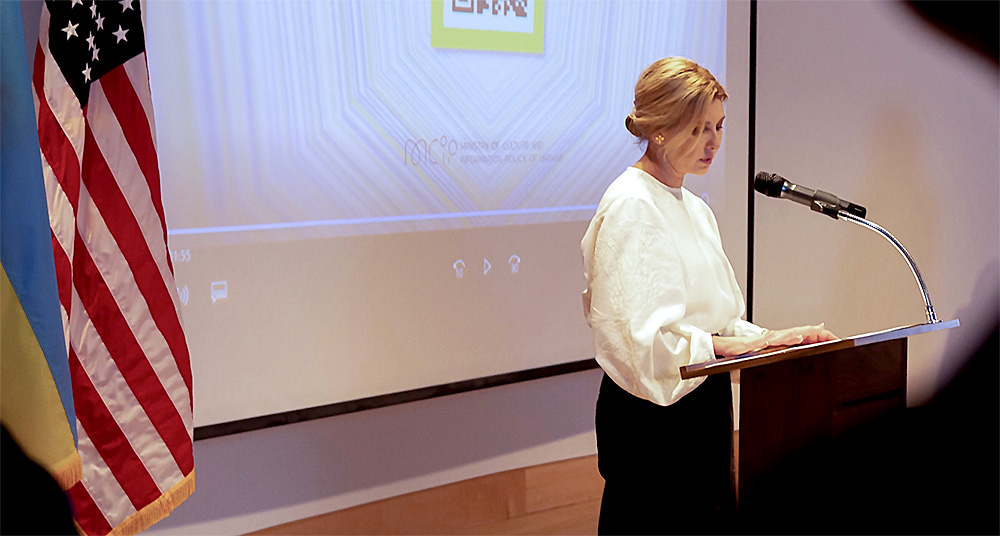
Photo: Kateryna Czartorysky
SAFE supports the vital needs and adaptive strategies of museums in Ukraine during the war. Launched by The Ukrainian Museum following Russia’s full-scale invasion of Ukraine, SAFE engages professionals in North America to assist their Ukrainian colleagues with the systematic structural stabilization of institutions, collections, and heritage sites; reinvention of organizational approaches; and recovery tactics. Expanding upon the Museum’s commitment to celebrate and preserve the cultural heritage of Ukraine, SAFE initiatives evolve from a new baseline: the pressing need for critical treatment of Russian and Soviet colonialism and the urgency to implement reparative policies for Ukraine across cultural institutions in the international arena.
SAFE prioritizes the following goals:
- support first-aid mobile teams of cultural workers in Ukraine: offer resources for stabilization, the transfer of objects and data to safer storage, conservation planning, and early recovery in the aftermath of the war;
- provide emergency financial support for museum workers who find themselves in hot spots and life-threatening circumstances but continue their professional obligations;
- engage lawyers and advocate for the retrieval of stolen artifacts and reparations for damages;
- maintain dialogue among SAFE program donors, museum experts, and government and volunteer initiatives in Ukraine.
To make a donation to the SAFE program, please click the button below and write “SAFE” in the notes section:
