
From a Volhynian Village to the Moon
A lunar crater, a 17th-century center of religious reform, and a First World War front line all lead back to one small village in Volhynia. Meet the SAFE Program’s youngest museum grantee: the Kysylyn Museum, founded by historian Artur Alioshyn in November 2023 after years of research into the region’s remarkable history.

Kysylyn Museum
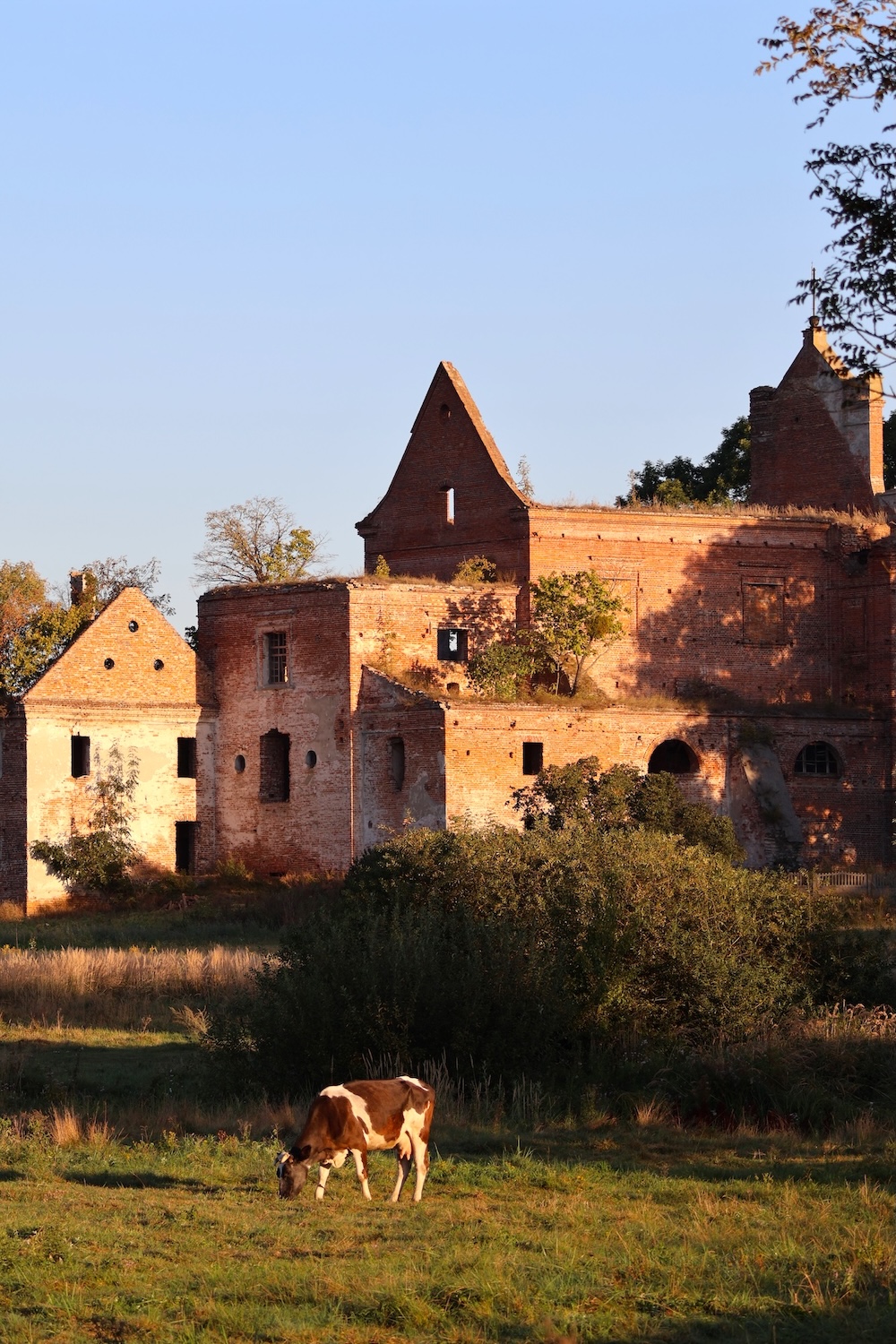
Once a town, the quiet village of Kysylyn retains its historic street grid and traces of its multicultural past, including a 1720 Carmelite monastery, a 1776 church, a German First World War defensive line, and a historic Catholic cemetery.
In the 17th century, Kysylyn was a major center of the Polish Brethren, or Socinians. Stanisław Lubieniecki (1623–1675), astronomer, historian of the Reformation, and author of an encyclopedia of comets, studied at the Arian Academy based in Kysylyn. The lunar crater Lubiniezky bears his name, poetically connecting the village to the Moon.
Artur Alioshyn is building the museum around these layers of history and the stories of local residents, connecting Kysylyn’s multicultural past with audiences in Ukraine and abroad. He has cultivated relationships with cultural institutions in Ukraine, Poland, and Germany, and now, through SAFE, is excited to build partnerships in the United States.
“It is very encouraging for our small team when museums with long histories and professional staff support us, recognize something useful in our work, and find value in what we are doing. We are learning how to do museum work, and these connections are very important to us,” says Alioshyn.
Watch Ukraїner’s expedition to Kysylyn and interview with Artur here
Артур Альошин x Lilia Kudelia
29 August 2026
An Interview
Як би ви описали Кисилин сьогодні — його громаду, музейну аудиторію та людей, які сюди приїжджають?
Кисилин сьогодні — тихе волинське село оточене майже з усіх сторін лісами з близько 250 мешканцями. Колишнє містечко зберегло урбаністичну сітку вулиць та декілька пам’яток історії, таких як монастир кармелітів 1720 року, церкву 1776, німецьку лінію оборони період 1СВ, католицький цвинтар тощо.
Основною музейною аудиторією є мешканці або вихідці з Кисилина та сусідніх сіл середнього або старшого віку. Звісно, приїздять і туристичні групи дітей, а також відвідують нас іноземці, насамперед поляки.
Скільки років ви вже займаєтеся цією ініціативою?
Активно робота над створенням Музею Кисилина триває з середини 2023 року, а офіційне відкриття відбулося 8 листопада 2023 року.
Як змінилася увага до цієї локації за останні роки? Що ви помічаєте у ставленні професійної та міжнародної аудиторії до вашого проєкту та Кисилина загалом?
На сьогодні Музей Кисилина є єдиним місцем, де можна почути про минуле Кисилина від першої згадки до середини ХХ ст. до наших днів. За цих кілька років ми нав’язали контакт з інституціями та організаціями в Україні, Польщі, Німеччині, а тепер і у США. Це тішить наш маленький колектив, коли інші музеї з довгою історією та професіоналами підтримують нас, знаходять у нашій діяльності щось корисне і для себе. Ми вчимося музейній справі, і контакти важливі для нас.
Що б ви хотіли розповісти людині з Нью-Йорка про Кисилин — чому сюди варто приїхати і що неодмінно варто побачити/ зробити в околицях?
Чесно, ймовірно, буде важко здивувати в Кисилині чимось людину з багатокультурного і багатомовного NY в Кисилині 😅 Однак, колишнє містечко може бути цікавим для вузькопрофільних дослідників реформації, адже у XVII столітті Кисилин був великим центром Польських Братів (социніан); для дослідників Першої світової війни, адже лінія фронту близько двох років проходила через Кисилин і залишилися пам’ятки того часу. Мабуть, для людини з мегаполісу, було б цікаво побачити звичайне традиційне сільське життя, тварин на вільному випасі, зоряне небо, дерев’яну архітектуру, а також послухати як пів століття в кордонах СРСР досі впливає на колись мультикультурне містечко. Якщо я вже згадав зоряне небо, то варто згадати Станіслава Любенецького який навчався в Кисилині в аріанській академії, був автором енциклопедії комет та книги про історію полсьької реформації, а також на його часть названа група кратерів на місяці.
How would you describe Kysylyn village today – its community, its museum audience, and the people who come here?
Today, Kysylyn is a quiet Volhynian village surrounded by forests on almost all sides, with a population of about 250. The former town has retained its historic street grid and several important historical sites, including the 1720 Carmelite monastery, a church dating to 1776, a German defensive line from the First World War, a Catholic cemetery, and others.
Our museum’s primary audience consists of current residents and former inhabitants of Kysylyn and neighboring villages, mostly middle-aged and older people. Of course, we also receive groups of schoolchildren and other young visitors, as well as international visitors, primarily from Poland.
How many years have you been working on this initiative?
Active work on establishing the Kysylyn Museum has been underway since mid-2023, and the museum officially opened on November 8, 2023.
How has attention to this location changed in recent years? What have you noticed in the response of professional and international audiences to your project and to Kysylyn more broadly?
Today, the Kysylyn Museum is the only place where visitors can learn about the history of this village – from its earliest mention through the mid-20th century and up to the present day. Over the past few years, we have established connections with institutions and organizations in Ukraine, Poland, Germany, and now the United States. It is very encouraging for our small team when museums with long histories and professional staff support us, recognize something useful in our work, and find value in what we are doing. We are learning how to do museum work, and these connections are very important to us.
Why should New Yorkers come to Kysylyn, and what should they definitely see or do in the area?
Honestly, it would probably be difficult to surprise someone from multicultural and multilingual New York with anything in Kysylyn. 😅 However, the former town could be of particular interest to researchers specializing in the Reformation, since in the 17th century Kysylyn was an important center of the Polish Brethren (Socinians).Scholars of the First World War will find this place interesting, since the front line passed through Kysylyn for nearly two years and traces of that period remain. Our museum would be interesting to anyone from a major city who would enjoy experiencing ordinary traditional village life, seeing free-grazing animals, looking at the night sky, and encountering wooden architecture. Here you can also learn from the locals’ stories how half a century within the borders of the Soviet Union continues to shape what was once a multicultural town. And since I have mentioned the night sky, I should also mention Stanisław Lubieniecki (1623- 1675), who studied in Kysylyn at the Arian Academy. He was the author of an encyclopedia of comets and a book on the history of the Polish Reformation, and a group of craters on the Moon was named in his honor.